
Cornerstone Plastic Surgery has partnered with Rejuvenessence to bring you an expert-led Weight Loss Program. Learn More on our partner’s website!


With fat transfer breast augmentation at our practice in South Jersey, fat cells are harvested from another area of your body with sufficient donor material. Because the donor material is native to your body, the chance of rejection is far reduced. The fat cells are prepared and purified before being injected into your breast area to restore shape and volume. Benefits are twofold: you achieve an attractive bust and a more shapely body.
You may be a good candidate for fat transfer breast augmentation at Cornerstone Plastic Surgery in Linwood and Toms River, NJ if the following applies:
Otherwise known as fat grafting, the surgeon will use liposuction to remove fat tissue from another area of your body, such as your buttocks, belly, or thighs. The tissue is then processed to remove all excess fluid and fat cells unlikely to survive the transfer. We then inject the pure fat into your breast area, enhancing your breast shape and symmetry.
During your consultation, Dr. Coville will evaluate your donor fat availability in areas such as the abdomen, thighs, or flanks, along with your breast tissue and skin quality, to determine if fat transfer to breasts is the right option for you. He will review your health history and discuss your desired size and shape. In preparation for surgery, you will receive instructions on diet, medications, and supplements to avoid. Patients who smoke are advised to stop several weeks before and after surgery, since smoking can reduce fat cell survival and slow healing. Maintaining a stable weight before your procedure also helps ensure the best possible fat graft survival.
Breast fat transfer is typically performed under general anesthesia or local anesthesia with sedation at one of Dr. Coville’s accredited surgical facilities in Linwood or Toms River, NJ. The procedure begins with liposuction, most often using Power Assisted Liposuction, to gently harvest fat from the donor area. The harvested fat is then processed in a closed, sterile system to separate healthy fat cells from fluid, blood, and damaged tissue. Once purified, Dr. Coville carefully injects the fat into multiple layers of the breast tissue in small amounts. This layering technique increases the surface area of fat in contact with healthy, blood supplied tissue, which supports better graft survival and a smoother, more natural result. The full procedure typically takes two to three hours, depending on how many areas are treated.
Most patients experience mild to moderate swelling and bruising at both the donor site and the breasts for one to two weeks following surgery. Compression garments are typically worn over the donor area to support healing and help the skin adhere to its new contour. Many patients return to light activity within a few days and to work within one to two weeks, though strenuous exercise should be avoided for at least four to six weeks. Because a portion of the transferred fat is naturally reabsorbed by the body in the months after surgery, final results typically become apparent around three to six months post-surgery. The fat cells that survive this period are considered permanent, so results are generally long-lasting, barring significant weight change.
Fat transfer breast augmentation and breast implants both add volume, but they work differently. Fat transfer uses your own tissue for a soft, subtle increase with no foreign material and shorter recovery, while implants can achieve a larger, more dramatic size increase and are often the better choice for patients seeking significant volume. Dr. Coville will help you decide between fat transfer, implants, or a combination of the two during your consultation, based on your goals and the amount of donor fat available.
As with any surgical procedure, risks include infection, asymmetry, fat necrosis, and small oil cysts or calcifications at the graft site, complications that are comparable in rate to those seen with traditional implant based augmentation. Dr. Coville minimizes these by transferring fat in small, layered amounts using a closed, sterile processing system, and by carefully screening each patient’s donor fat and breast tissue beforehand, an approach consistent with long term studies supporting fat grafting as a safe option for cosmetic breast enhancement.
Discover more about recovery and long term results with these resources from Cornerstone Plastic Surgery’s blog.
Recovery times involve both the donor site where liposuction was performed and your breasts, which received the transferred fat. Recovery also depends on the amount of fat tissue removed. You can expect bruising for one to three weeks after the surgery. Avoid exercise during this time frame. A lot of our New Jersey patients elect to take a week or two off work.
Patients treated with a natural breast augmentation fat transfer often see:
While traditional fat transfer uses your own harvested fat to enhance breast shape and volume, alloClae filler offers a different regenerative approach that does not require liposuction or donor fat harvesting.
alloClae is a structural adipose matrix designed to restore soft, natural-looking fullness while integrating with surrounding tissues over time. For patients who do not have enough donor fat for transfer, want less downtime, or prefer a non-surgical alternative to implants, alloClae may be an excellent option for moderate breast enhancement and contour refinement.
The amount of fat needed depends on your goals and how much donor fat is available in areas like the abdomen, thighs, or flanks. Because a portion of transferred fat is naturally reabsorbed by the body, Dr. Coville often transfers more fat than the final target volume to account for this, and he may recommend a second session for patients who want a larger increase.
Yes. Because fat transfer breast augmentation already involves liposuction of a donor area, many patients combine it with a tummy tuck, mommy makeover, or additional body contouring for more comprehensive results in a single recovery period. Dr. Coville will discuss which combination best suits your goals during your consultation.
Written By: Dr. Frederick Coville
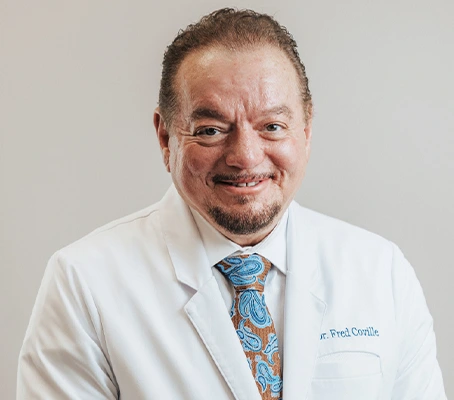
Frederick A. Coville, M.D., Cornerstone Plastic Surgery’s Owner and Medical Director


Frederick A. Coville, M.D., Cornerstone Plastic Surgery’s Owner and Medical Director, has been an Aesthetic and Reconstructive Plastic Surgeon for over 30 years. He firmly believes each of us possesses an inner “Foundational Beauty™.”
As a student of beauty all his life, he calls upon his naturally artistic eye and God-given talents as a surgeon to deliver the results you demand. Dr. Fred likes to say, “It’s my job to help you find Your Beautiful™!”
Request your consultation and let
us create a custom experience for you


★★★★★
“Beautiful office and an all around lovely experience. From the moment you walk in you are treated with professionalism and friendliness. The front desk staff is great and the doctor is fantastic! I highly recommend them if you are on the fence.*”
Shayla A.
Google Review
★★★★★
“Let’s be honest. It is like a spa. Everyone is so wonderful and nice. Any procedure I have had done here has left me with excellent results. The staff as well as the doctor are so ridiculously nice, you feel like a celebrity.*”
Kristin P.
Google Review
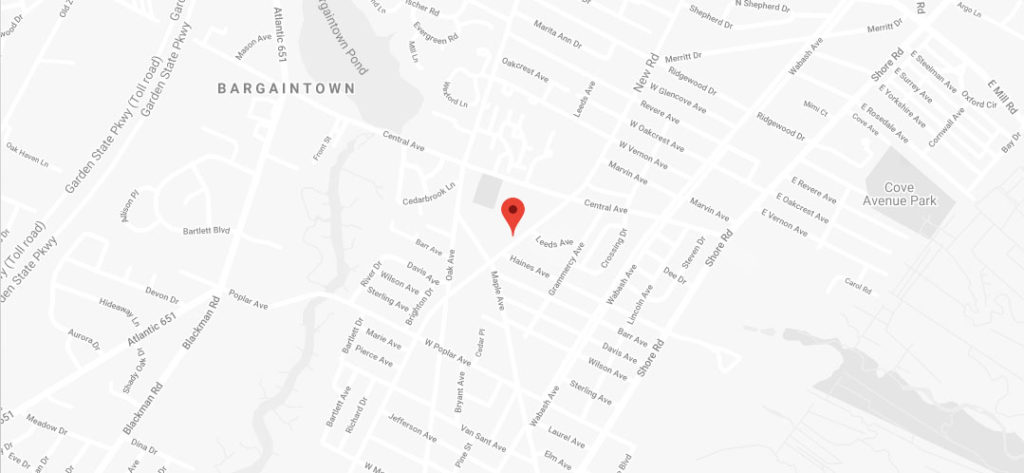
Dr. Fred Coville is a renowned Aesthetic and Reconstructive Plastic Surgeon. He proudly extends his services to Toms River, Atlantic County, Cape May County, Ocean County, South Jersey and the greater Philadelphia area. With a distinguished career spanning over 30 years, Dr. Coville is a trusted professional delivering personalized and natural-looking results. His expertise caters to clients in locations such as Atlantic City, Trenton, Toms River, Vineland, Bridgeton, Hammonton, Cape May, and Cherry Hill.
Accessibility: If you are vision-impaired or have some other impairment covered by the Americans with Disabilities Act or a similar law, and you wish to discuss potential accommodations related to using this website, please contact our Accessibility Manager at 609.228.9714
© 2026 Cornerstone Plastic Surgery & Aesthetic Medicine. All Rights Reserved.
Web Design and Digital Marketing by Webtools.


